
Spaced Repetition: The Study Method That Makes Forgetting Work for You
Spaced repetition is the most reliable way to remember what you learn. Discover the research, the ideal gaps between reviews, and a simple plan you can start tonight.
Corux Learning 7 min read

In 1885, a German scientist sat alone in a quiet room and did something strange. He memorized lists of nonsense syllables, such as dax, bok, and yat, and then tested himself over and over, for months. His name was Hermann Ebbinghaus, and he was trying to answer a simple question: how fast do we forget?
The answer was uncomfortable. Within one hour, he had lost about half of what he had learned. After a day, most of it was gone. He drew the result as a curve, and that curve has been copied into textbooks for more than a century. It is called the forgetting curve.
But Ebbinghaus found something else, and this is the part most people miss. Every time he relearned a list, the curve got flatter. Forgetting slowed down. The second time he learned something, it stayed longer. The third time, longer still.
That discovery is the heart of spaced repetition: the simple idea that reviewing something several times, with gaps in between, builds a memory far stronger than reviewing it once for a long time. It is one of the most tested findings in the whole science of learning. And almost nobody is taught how to use it.
What spaced repetition actually is
Spaced repetition means spreading your study of one topic across several sessions, separated by time, instead of doing it all at once.
Picture two students with the same chapter to learn and the same four hours to spend. The first student sits down on Sunday and studies for four hours straight. The second student studies for one hour on Sunday, one hour on Tuesday, one hour on Friday, and one hour the following Wednesday.
Same material. Same total time. But on a test two weeks later, the second student will almost always remember more. In some studies, the difference is enormous.
Scientists call this the spacing effect. It has been found in children and adults, in medical students and language learners, in people memorizing word pairs and people learning to type. It works for facts, for skills, and for ideas. It is not a trick. It is how memory is built.
Why gaps help: the surprising power of almost forgetting
Here is the counterintuitive part. Spaced repetition works because you forget a little between sessions.
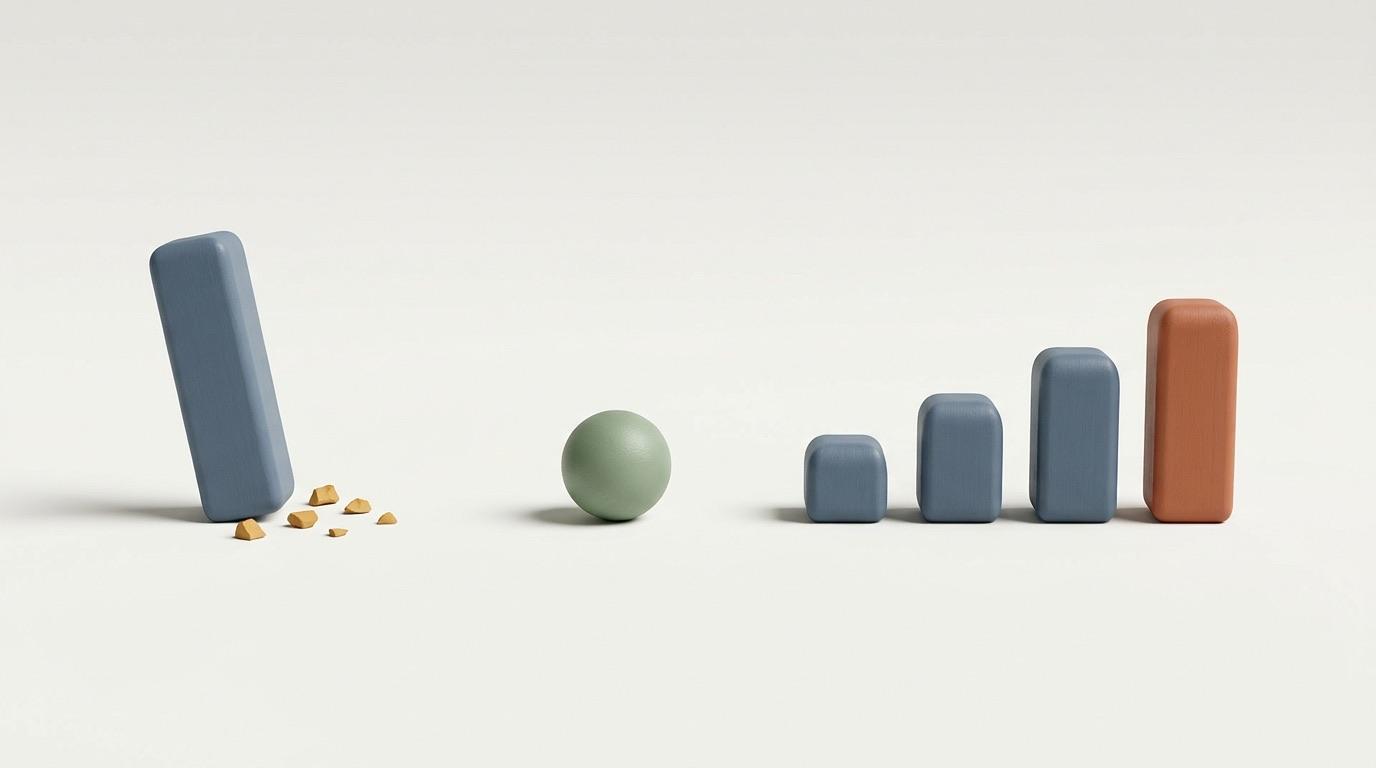
When you study something for the second time one hour after the first, it feels easy. The memory is still fresh. Your brain barely has to do any work to find it, so it does not strengthen the memory much.
When you come back after three days, the memory has faded. You have to search for it. That effort of reaching for something half-forgotten is exactly what tells your brain, this matters; keep it. Researchers describe this as a desirable difficulty. The struggle feels like failure, but it is the learning.
This is also why cramming feels so good and works so badly. Cramming gives you the smooth, easy feeling of recognition in the moment. Then the whole pile fades together, often within days.
The research: how long should the gaps be?
For a long time, the honest answer was, “longer than you think.” Then, in 2008, a team led by psychologist Nicholas Cepeda ran the biggest study of spacing ever done.
They taught more than 1,350 people a set of trivia facts. Then they brought people back for a review session after a gap that ranged from a few minutes to three and a half months. Finally, they tested everyone after a further delay of up to one year.
Two findings stood out.
First, there was a sweet spot. For any test date, making the gap longer improved results up to a point, and then slowly made them worse. A gap that is too short is far more harmful than a gap that is slightly too long.
Second, the best gap depended on how long you needed to remember. The longer the test was away, the longer the ideal gap between first study and review. Cepeda’s simple rule of thumb: if your exam is about three weeks away, review roughly 20% of that time after you first learn it, which is a few days. If you want to remember something for years, the first review should come months later.
The team concluded that many common educational practices, including the typical pattern of learning something once and testing it a week later with no review in between, are highly inefficient for lasting memory.
A simple spacing schedule you can use tonight
You do not need an app or a formula to start. You need a calendar and a habit. Here is a schedule that works well for most school and university subjects.
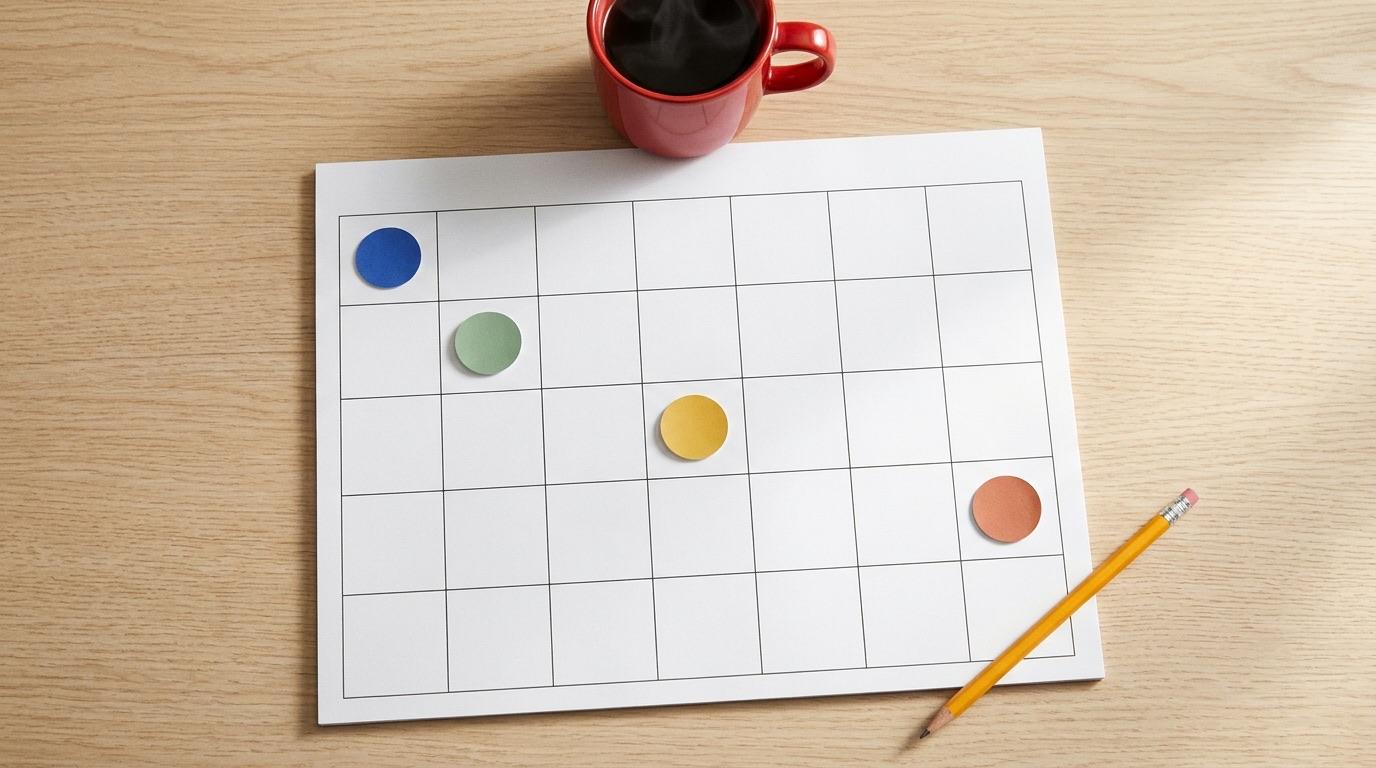
Day 0: Learn it. Read the chapter, attend the class, work through the problems. Do this properly once.
Day 1: First review (10 minutes). The next day, before you look at your notes, write down everything you can remember on a blank page. Then open your notes and fill the gaps. This review catches the fastest part of the forgetting curve.
Day 3 or 4: Second review (10 minutes). Same process. Blank page first, notes second. You will notice some things have stuck and some have slipped. Focus on the slipped ones.
Day 7 to 10: Third review (10 minutes). By now, the easy parts need almost no effort. Spend your time only on what is still fuzzy.
Day 21 to 30: Fourth review (10 minutes). One more pass. Most of the chapter should now feel permanent.
Notice what this schedule costs. Four reviews of ten minutes each is forty minutes, spread over a month. For that price, most of the material stays with you for the exam and well beyond. Compare that with the three-hour cramming session the night before, most of which will be gone by the following week.
Three ways to make spacing even stronger
Spaced repetition is powerful on its own. Combined with a few other research-backed habits, it becomes the backbone of a complete study system.
1. Space your retrieval, not your rereading
The reviews in the schedule above start with a blank page. That is on purpose. Reading your notes again feels productive, but a 2011 study by Jeffrey Karpicke and Janell Blunt found that students who practiced recalling material from memory remembered about 50% more a week later than students who studied by rereading or by making concept maps. Spacing tells you when to review. Retrieval tells you how. Use both.
2. Mix the topics
When you come back for a review, do not review only one chapter. Pull a few questions from two or three topics into the same session. This is called interleaving, and it forces your brain to work out which method applies to which problem, which is exactly what an exam demands.
3. Sleep between sessions
A gap that includes a night of sleep is worth more than a gap of the same length during the day. Sleep is when the brain replays and strengthens the day’s memories. One study session before bed and one review the next morning is one of the most efficient pairs you can build.
Spaced repetition apps: helpful, but not required
Flashcard apps such as Anki, RemNote, and Quizlet have made spaced repetition famous. They work by tracking how well you know each card and scheduling the next review automatically. Cards you know well come back less often. Cards you struggle with come back sooner.
These apps are excellent for facts, vocabulary, and definitions. Medical students use them to learn thousands of terms. Language learners use them for words and phrases.
But a word of caution. An app can tempt you into making hundreds of tiny cards and feeling busy. The research supports the schedule, not the clicking. If your subject is about understanding and problem-solving, such as math, physics, or essay writing, a paper schedule with practice problems will often serve you better than a deck of definitions. Use the tool that fits the material.
The mistakes that quietly cancel the benefit
Reviewing too soon. Rereading your notes an hour after class feels responsible. It gives almost no benefit, because nothing has faded yet. Wait at least until the next day.
Reviewing passively. Highlighting, rereading, and watching the lecture again are not reviews in the research sense. A review means pulling the information out of your own head.
Giving up after one gap. The first review is the hardest, because you will have forgotten the most. Students sometimes take that as a sign the method is not working. It is the opposite. That difficult first review is where the biggest gain happens.
Treating it as a cramming replacement. Spacing is not a last-minute rescue plan. It only works if you start when you first learn the material. The good news is that each session is short.
Who this works for
Spaced repetition is not a method for one type of learner. It has been tested with young children learning spelling, with teenagers learning science, with university students learning anatomy, and with adults learning a new language in their fifties and sixties. The effect appears in every group.
If you are a student, it means your revision can start in week one and never need a frantic final week. If you are a parent, it is the method behind the advice to “review a little each day.” If you are learning something for yourself, with no exam at all, it is how you make that learning stick for life.
Start with one subject this week
Pick one subject. Pick one chapter you learned recently. Tomorrow, take a blank page and write down everything you remember about it. Then check your notes. Mark the gaps. Put a reminder in your calendar for three days from now, and do it again.
That is spaced repetition. Not an app, not a system you have to buy, just a ten-minute habit built on a discovery from 1885 that most of us were never taught.
The forgetting curve is real. But it bends. And you are the one who gets to bend it.
New to these techniques? Start with our Learn how to learn guide, which compares all five and shows which one fixes which study problem.
Frequently asked questions
How many times should I review something to remember it long-term? Most research suggests three to five spaced reviews, with growing gaps, move a memory from fragile to durable for most school material. The exact number depends on how hard the material is and how long you need it.
Is spaced repetition better than cramming? For anything you want to remember beyond a few days, yes, and by a wide margin. Cramming can get you through tomorrow’s quiz. Spacing gets you through the final exam and the course after it.
Can I use spaced repetition for math and problem-solving, not just facts? Yes. Instead of flashcards, return to a set of practice problems on a spaced schedule and solve them again from scratch. The spacing effect applies to skills as well as facts.
What is the best spaced repetition app? Anki is the most widely used and is free on most platforms. RemNote and Quizlet are popular alternatives. The schedule matters more than the app, so choose the one you will actually open.
Sources
- Cepeda, N. J., Vul, E., Rohrer, D., Wixted, J. T., & Pashler, H. (2008). Spacing effects in learning: A temporal ridgeline of optimal retention. Psychological Science, 19(11), 1095–1102. https://doi.org/10.1111/j.1467-9280.2008.02209.x
- York University news release on the Cepeda study and its practical review intervals (YFile, York University, 2008).
- Karpicke, J. D., & Blunt, J. R. (2011). Retrieval practice produces more learning than elaborative studying with concept mapping. Science, 331(6018), 772–775. https://doi.org/10.1126/science.1199327
- Ebbinghaus, H. (1885). Über das Gedächtnis (Memory: A Contribution to Experimental Psychology). Replicated by Murre & Dros (2015), PLOS ONE. https://doi.org/10.1371/journal.pone.0120644
- Rohrer, D., & Pashler, H. (2007). Increasing retention without increasing study time. Current Directions in Psychological Science, 16(4), 183–186. https://doi.org/10.1111/j.1467-8721.2007.00500.x


