
The Memory Palace: How an Ancient Trick Lets Ordinary People Remember Like Champions
The memory palace, or method of loci, is the technique behind every world memory champion. Learn the 2,500-year-old story, the brain science, and how to build your first palace tonight.
Corux Learning 7 min read

Around 500 BC, a Greek poet named Simonides of Ceos was hired to perform at a banquet in Thessaly. Partway through the evening, a messenger called him outside. Moments after he stepped through the door, the roof of the hall collapsed, killing everyone inside.
The bodies were crushed beyond recognition. Grieving families could not tell which was which. But Simonides discovered that he could. He closed his eyes, pictured the hall as it had been, and walked through it in his mind. He remembered where every guest had been sitting. One by one, he identified the dead by their places at the table.
The Roman orator Cicero told this story four centuries later as the origin of a memory technique. Simonides had realized something: the human mind remembers places with almost no effort. If you could attach the things you wanted to remember to places you already knew, you could remember almost anything.
The Greeks and Romans called it the method of loci, from the Latin word for places. Today most people call it the memory palace. It was used by orators to memorize hours of speeches, by medieval monks to memorize whole books, and today by every single champion in the world of competitive memory. And a 2017 brain-imaging study showed that ordinary people can learn it in six weeks.
What a memory palace is
A memory palace is a familiar place, your home, your school, your walk to the bus stop, that you use as a filing system for information.
The method has three parts.
First, you choose a place you know so well you could walk through it with your eyes closed. Second, you pick a fixed route through that place with a series of distinct stops: the front door, the shoe rack, the kitchen table, the sofa, the window. Third, when you need to remember a list of things, you turn each item into a vivid mental image and place it at one of the stops, in order.
To recall the list, you simply walk the route in your mind. At each stop, the image is waiting for you.
That is the whole method. It sounds too simple to work. The evidence says otherwise.
Why it works: your brain is a map first
Humans are not naturally good at remembering lists of words or numbers. Nothing in our evolutionary past required it. But we are extraordinarily good at two things: remembering places, and remembering striking images.
Think about it. You can probably picture the layout of a house you lived in as a child, down to which way the doors opened, without ever having tried to memorize it. You can remember a face you saw once in an unusual situation. Spatial memory and visual memory are among the oldest and strongest systems in the brain.
The memory palace works by borrowing these strong systems to carry information the brain would otherwise drop. A shopping list is forgettable. A giant carton of milk spilling down your front steps, blocking the door, is not. And because the stops along your route are in a fixed order, the method gives you something no other technique does: you remember not just the items, but their sequence.
The science: what happens to ordinary brains
For a long time, the memory palace had a reputation as a party trick, something for performers and eccentric champions. Then neuroscientists started looking.
In 2003, a team led by Eleanor Maguire at University College London scanned the brains of ten of the world’s top memory performers. She expected to find unusual brain structures. She found none. Their brains looked ordinary. The difference was in activity: when memorizing, the champions lit up brain regions involved in spatial navigation, including the hippocampus. Nine of the ten reported using the method of loci.
In 2017, Martin Dresler at Radboud University in the Netherlands took the next step. He recruited 51 people with completely ordinary memories and no training. Before training, they could remember about 26 to 30 words from a list of 72. Then he split them into three groups. One group did nothing. One group did working-memory exercises similar to a matching card game. The third group trained for thirty minutes a day, for forty days, in the method of loci.
The results were published in the journal Neuron. The untrained group improved by about seven words, probably from practice with the test. The working-memory group improved by about eleven. The memory palace group went from 26 words to 62. They had more than doubled their recall in six weeks of half-hour sessions. Four months later, with no further training, their performance was still high.
Brain scans told the same story. After training, the memory palace group’s brain connectivity patterns had shifted to resemble those of the memory champions Dresler had scanned alongside them. Their brains had not grown new parts. They had learned to use old parts in a new way.
Dresler’s co-author, Boris Konrad, was one of those champions. He had not been born with a special memory. He had taken up memory training to improve his grades.
How to build your first memory palace
You can do this in the next twenty minutes.
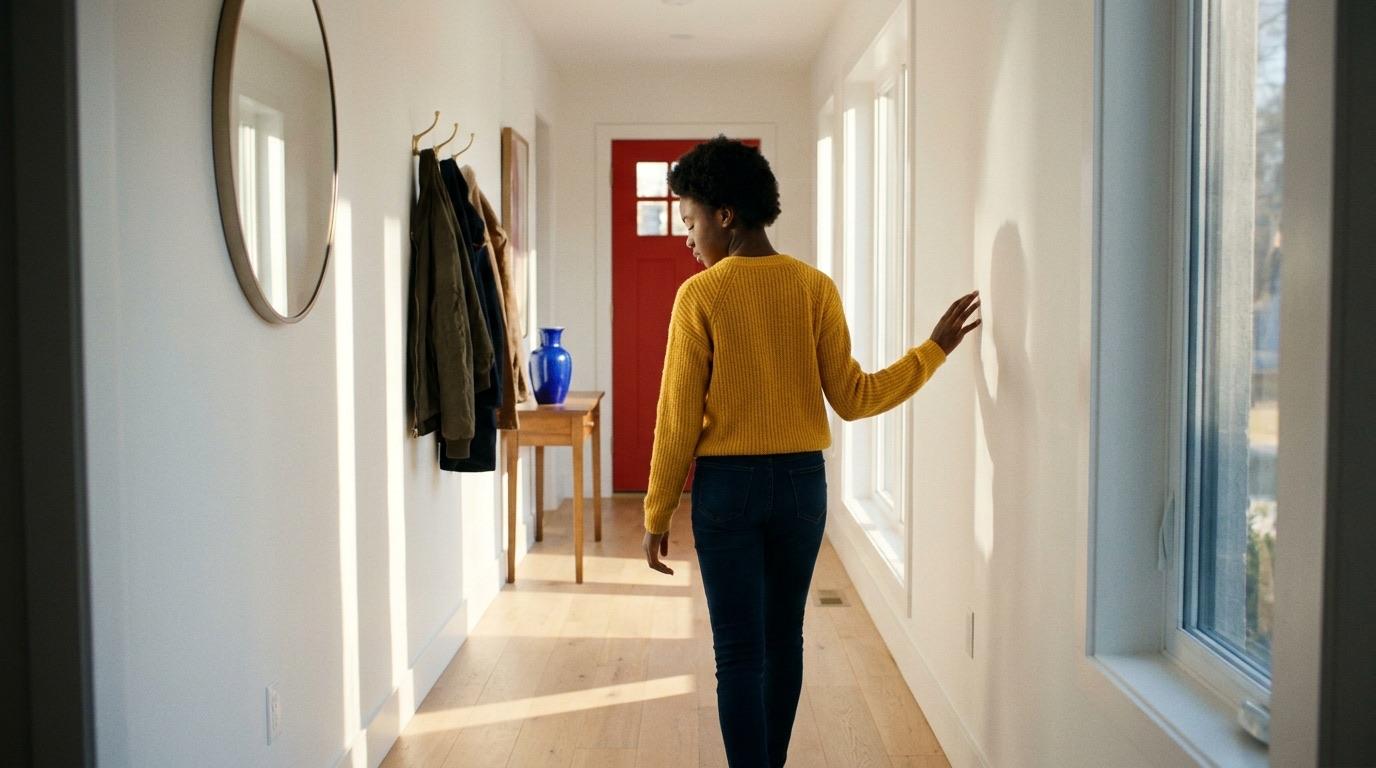
Step 1: Choose your palace. Start with your own home. You know it better than anywhere else, and you can check your route by walking it.
Step 2: Fix a route with ten stops. Walk through your home in your mind, always in the same direction. Choose ten spots that are clearly different from each other: front door, hallway mirror, coat hook, kitchen sink, fridge, table, sofa, television, bookshelf, bedroom door. Write them down in order. Walk the route twice, with your eyes closed, until it is automatic.
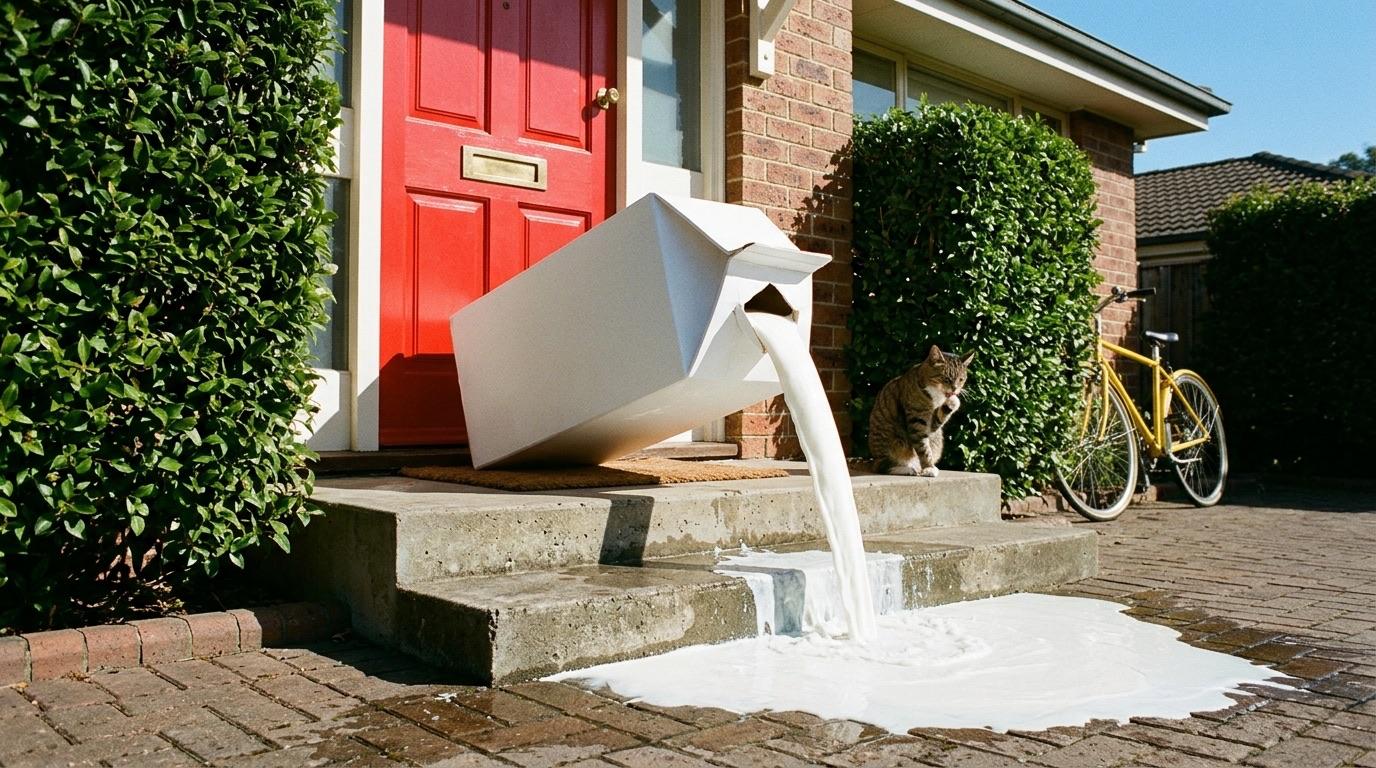
Step 3: Make your images strange. Now take a list to learn. Suppose it is the first ten elements of the periodic table: hydrogen, helium, lithium, beryllium, boron, carbon, nitrogen, oxygen, fluorine, neon. For each one, build an image that is exaggerated, moving, funny, or absurd, and attach it to a stop.
At your front door, a hydrogen bomb’s mushroom cloud rises from the doormat. In the hallway mirror, your reflection is a squeaky-voiced helium balloon floating away. Hanging from the coat hook, a lithium battery is dripping acid onto the floor. And so on, down the route.
The stranger the image, the better it sticks. Boring images fade. Ridiculous ones do not.
Step 4: Walk the route and recall. Close your eyes. Start at the front door. What is there? Move to the mirror. What is there? Go all the way through. Then check against the list.
Most people get eight or nine out of ten on the first try. Fix the weak images, walk the route again, and you will have all ten.
Making it work for real subjects
A memory palace is not only for lists of elements or shopping items. Here is how students use it.
History. Put the causes of a war along one route, the key battles along another, the consequences along a third. Each image can carry a date if you attach a person or object that stands for the number.
Biology. Walk the stages of cell division through your kitchen. Each stage is a scene at a different counter or appliance.
Languages. Give each grammar topic its own room. Irregular verbs live in the bathroom, each one acting out its meaning in the shower or the mirror.
Speeches and presentations. This is what the Greeks used it for. Place one image per main point along the route. When you speak, you walk the route and never need notes.
Over time, you will need more palaces. Use your school, your grandparents’ house, a shopping street you know, a route you walk every day. Memory champions keep dozens. Students usually find five or six is plenty for a term.
The honest limits
The memory palace is a tool for storing information in order. It is not a tool for understanding it. Memorizing the stages of cell division will not teach you why each stage happens. For that, you need explanation and practice.
Research also finds that the skill does not transfer much to everyday forgetfulness. Dresler’s trained volunteers became far better at remembering lists. They were not noticeably better at remembering where they had left their keys. The technique works on what you deliberately place in it.
And the images need maintenance. A palace you build for an exam and never revisit will fade over months. If you want the contents for life, walk the route again on a spaced schedule: the next day, a week later, a month later.
Why this matters beyond exams
The deeper lesson of the memory palace is the one Dresler’s study made plain. Memory champions are not born. The 23 athletes he scanned all reported starting with ordinary memories and training for months or years. The technique they used is 2,500 years old and can be learned from a blog post.
For a student who has been told they “just have a bad memory,” that is worth hearing. A bad memory for lists is the normal human condition. The method was missing, not the ability.
Tonight
Pick a list you need to learn. Walk through your home and choose ten stops. Attach ten absurd images. Walk the route once and test yourself.
Twenty minutes from now, you will have done what Simonides did in that collapsed hall, and you will understand why every memory champion alive still does the same thing.
New to these techniques? Start with our Learn how to learn guide, which compares all five and shows which one fixes which study problem.
Frequently asked questions
Is the memory palace the same as the method of loci? Yes. “Method of loci” is the older, academic name, from the Latin for places. “Memory palace” is the popular name. Both describe placing vivid images along a familiar route and recalling them by mentally walking it.
How long does it take to learn the memory palace technique? You can build and use your first palace in about twenty minutes. In the Dresler study, ordinary people more than doubled their recall after forty days of thirty-minute sessions, and kept the gain four months later.
Does the memory palace improve memory in general? It dramatically improves recall of information you deliberately place in it. It does not noticeably improve everyday memory for things like keys or appointments, which you never encoded in the first place.
Can children use a memory palace? Yes. Children often take to it faster than adults, because inventing absurd images comes naturally. A route through the home or classroom works well.
Sources
- Dresler, M., Shirer, W. R., Konrad, B. N., Müller, N. C. J., Wagner, I. C., Fernández, G., Czisch, M., & Greicius, M. D. (2017). Mnemonic training reshapes brain networks to support superior memory. Neuron, 93(5), 1227–1235. https://doi.org/10.1016/j.neuron.2017.02.003
- Radboud University summary of the Dresler study. https://neurosciencenews.com/memory-training-longevity-6221/
- Smithsonian Magazine report on the Dresler study and Boris Konrad. https://www.smithsonianmag.com/science-nature/why-you-can-train-your-brain-memory-champion-still-forget-your-car-keys-180962496/
- Maguire, E. A., Valentine, E. R., Wilding, J. M., & Kapur, N. (2003). Routes to remembering: The brains behind superior memory. Nature Neuroscience, 6, 90–95. https://doi.org/10.1038/nn988
- Cicero, De Oratore, Book II (the Simonides story). Yates, F. A. (1966). The Art of Memory. University of Chicago Press.
- Foer, J. (2011). Moonwalking with Einstein: The Art and Science of Remembering Everything. Penguin.


